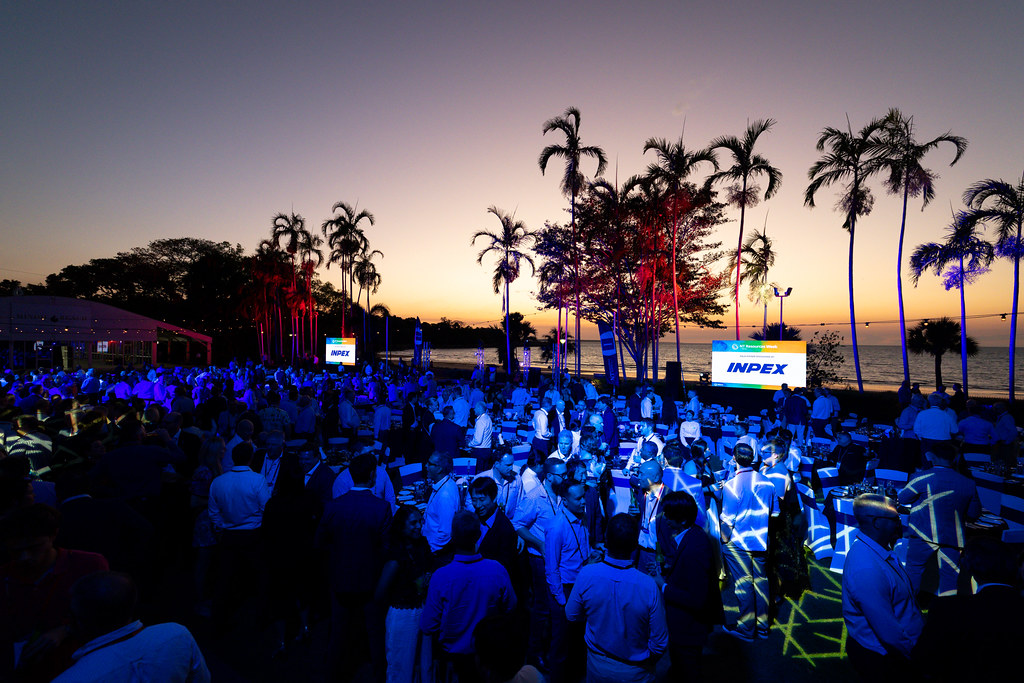
Every year, NT Resources Week offers a useful gauge of where the resources and energy sector is heading, not where the marketing decks say it’s heading. This year’s event, held against the backdrop of Beetaloo Basin’s imminent first gas, the Barossa LNG project already shipping cargoes to Japan and continued progress on the Middle Arm Precinct, drew record attendance and a noticeably different tone in the conversations happening on the floor.
Connectivity, once a footnote in most resources and energy discussions, is now a headline topic in its own right. And the conversations weren’t theoretical. Site operators, project engineers and procurement teams weren’t asking whether they needed better connectivity, they were asking which combination of technologies would hold up in the field.
LEO, GEO and private 5G: three technologies, three different jobs
The most notable shift this year was how fluently attendees were talking about combining, rather than choosing between, connectivity technologies.
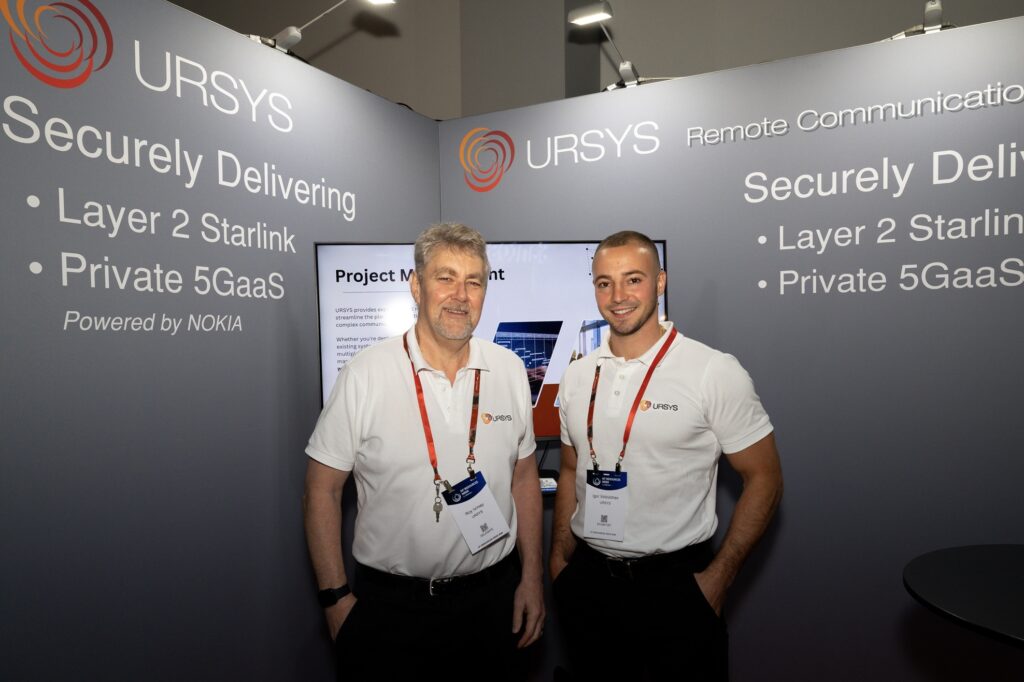
Low Earth Orbit (LEO) satellite, led by Starlink, remains the fastest way to bring high-bandwidth connectivity to a site with no existing infrastructure. Its low latency and rapid deployment have made it the default first step for remote operations. The important development here isn’t just the LEO constellation itself, it’s what sits behind it. Secure LEO solutions built on Starlink, delivered as a private Layer 2 connection rather than routed over the public internet, are now fully SOCI-compliant, closing a gap that had previously kept LEO out of consideration for genuinely critical infrastructure.
Geostationary (GEO) satellite, despite being the older of the two technologies, hasn’t gone anywhere, and for good reason. For sites where uptime is genuinely mission-critical, GEO offers a physically and operationally independent path. Two different orbits, two different points of failure, mean a problem on one network doesn’t necessarily take the other down with it. That distinction matters more than ever for operations governed by the SOCI Act, where a single point of failure isn’t just inconvenient, it’s a compliance exposure.
Private 5G, meanwhile, is moving from pilot projects to production infrastructure across the sector. According to the Private 5G Network Deployment Tracker & Forecasts 2026-2030 report (ResearchAndMarkets, August 2026), annual investment in private 5G networks for vertical industries is projected to grow at approximately 34% CAGR between 2026 and 2029, surpassing US$6.6 billion by the end of the period, driven largely by automation, autonomous vehicles and physical AI applications on industrial sites. Vendors are moving quickly to meet that demand. Nokia’s Modular Private Wireless platform now underpins mine-wide 4G/5G deployments such as IAMGOLD’s Côté Gold site and the Callio FutureMINE testbed in Finland, and its newly launched Cognitive Operations edge platform is explicitly built, in Nokia’s own words, to eliminate any single point of access failure in mission-critical field operations. Elsewhere, enterprise-first providers like GXC are taking a different route into the same problem, building CBRS and 5G O-RAN mesh networks designed specifically around mining, agriculture and construction use cases rather than adapting telco-oriented architecture after the fact. Whichever vendor a site chooses, private 5G’s ability to support network slicing, prioritising safety-critical signals like autonomous vehicle control over routine operational data, addresses problems that previous wireless generations simply couldn’t solve, particularly underground, where surface cellular networks don’t reach at all.
None of these three technologies replaces the others. The sites getting connectivity right are the ones treating LEO, GEO and private 5G as complementary layers, each solving a different problem, rather than picking one and hoping it covers everything.
Why the room leaned in when practitioners talked
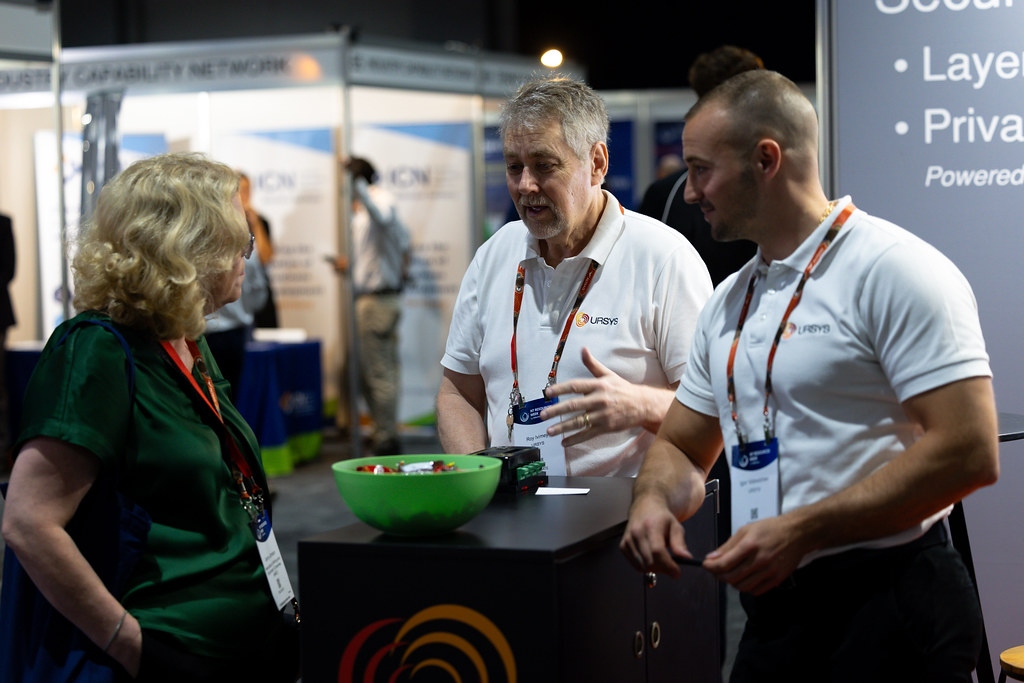
What stood out most at this year’s event wasn’t the technology itself, it was who attendees wanted to hear from. Vendor pitches got polite attention. Conversations with people who had deployed, broken and fixed these systems in the field got a different kind of engagement entirely.
That distinction matters. Anyone can describe what a redundant network architecture should look like on paper. Far fewer people have had to explain to a site manager why a connection didn’t fail over the way it was supposed to, or why a “redundant” setup still went down because both paths shared a single power circuit or a single piece of edge equipment.
Some of the most valuable conversations at this year’s event weren’t about which technology to buy. They were about what to avoid:
- Redundancy that isn’t redundant. Two satellite terminals mean little if they share the same power source, the same switch or the same physical rack. Genuine path diversity has to be traced all the way down to the failure points that could take both connections out simultaneously.
- Underestimating the small stuff. Some of the most cost-effective resilience on a site doesn’t come from the headline technology at all. Simple remote power-cycling devices, capable of automatically rebooting a stalled connection without a technician ever driving out, can be the difference between a brief blip and a multi-hour, multi-thousand-dollar site outage.
- Assuming compliance and security follow automatically. For SOCI-regulated operators, not every LEO or connectivity provider on the market currently meets the compliance bar required for critical infrastructure. That gap is often discovered too late, during an audit, rather than during design.
Not every conversation was about LEO, GEO or private 5G either. For marine operations, L-band and C-band came up repeatedly as a genuinely cost-effective, low-bandwidth alternative, alongside Starlink Maritime and Dedicated Service tiers starting at 720/180 Mbps, capable of acting as guaranteed backhaul for larger vessel or platform deployments.
What this means going forward
The Territory’s project pipeline, Beetaloo, Middle Arm, a growing list of mining and critical minerals developments, isn’t just a resources story. It’s a connectivity story. Every one of these projects will eventually need to solve the same underlying problem: how to keep a remote, often unmanned site online, secure and compliant, without over-engineering the solution or under-investing in the failure points that matter.
That’s the conversation URSYS has been having with operators, engineers, and project teams for over three decades, not as a vendor selling a single product but as a team that has designed, deployed, and supported these networks in the field long enough to know where they tend to break.
If your organisation is weighing up LEO, GEO, private 5G or some combination of the three for an upcoming project, we’d welcome the conversation.